

As our countries struggle under the weight of wokeism, ideological conformity and the relentless erosion of the values upon which our societies were built, who else is looking for a leader willing to fight back? How often today do we need a bulldog and, instead, get a lapdog nipping at our heels?
Throughout history, when free people have found themselves confronted by oppression, there has usually come a moment when someone has stood up and said what others were thinking but were afraid to say.
Not because that one person possessed some magical power to save a nation.
But because leadership gives courage a voice.
Eighty-six years ago, Britain found such a voice.
" Upon this battle depends the survival of Christian civilisation. Upon it depends our own .... life, and the long continuity of our institutions..... The whole fury and might of the enemy must very soon be turned on us. .... But if we fail, then the whole world will sink into the abyss of a new Dark Age made more sinister, and perhaps more protracted, by the lights of perverted science. Let us therefore brace ourselves to our duties..... men will still say, "This was their finest hour." - from Winston Churchill ( excerpt)
Eighty-six years ago, Britain faced annihilation from above. The bombs of the Luftwaffe rained down on London, Coventry, and countless towns, testing whether a free people could endure. Today, no planes drone above their skies, yet another kind of bomb has been unleashed: the slow detonation of mass migration, censorship, and cultural surrender. Then, the danger came from Hitler’s Reich. Now, it comes not from without, but from within - led by governments dismantling the very civilisation they were sworn to defend.
1940: A Nation on the Brink
France had fallen. Scandinavia and much of Western Europe lay under the Nazi jackboot. Britain stood isolated, facing the possibility of invasion and German domination.
Hitler believed that if he could crush the RAF and bomb Britain into submission, the British people would capitulate.
Operation Sea Lion - the planned invasion of Britain - depended upon control of the skies.
On the 15th of September, Battle of Britain Day, the Luftwaffe launched one of its greatest efforts to break Britain's resolve.
But what stood in its way was not simply aircraft.
It was leadership, and a population of patriotic citizens united in the determination to defend their country.
It was radar operators watching their screens. It was Dowding's command system. It was pilots climbing into Hurricanes and Spitfires. It was ground crews working exhausted hours to get aircraft back into the air.
It was factory workers, sailors, civilians and families carrying on while the bombs fell.
And it was a Prime Minister who refused to tell his people that defeat was inevitable.
Churchill gave the country something more important than reassurance.
He gave it resolve.
And when the battle was won, he gave history one of its most enduring sentences:
“Never in the field of human conflict was so much owed by so many to so few.”
2026: The Battle for Britain and the Commonwealth
Eighty-six years later, the battlefield looks very different.
There are no Luftwaffe formations approaching London. Our cities are not being reduced to rubble by bombs.
Yet something fundamental is being contested.
The battle today is being fought over borders, sovereignty, free speech, national identity, cultural inheritance and the right of ordinary people to question the direction in which their countries are being taken.

The weapons are different. There are no Stukas screaming from the sky.
There are laws, regulations, censorship, bureaucratic machinery, ideological pressure and political decisions.
And there is one chilling difference.
In 1940, Britain's leaders stood before their people and told them that their civilisation was worth defending.
Today, far too many political leaders appear embarrassed to say the same thing.
Some seem more concerned with managing dissent than listening to it.
Some appear more comfortable apologising for their own history than defending it.
And some seem to have forgotten that governments exist to serve the people who elected them - not to lecture those people into accepting whatever ideology happens to be fashionable.
That is the part that should concern us.
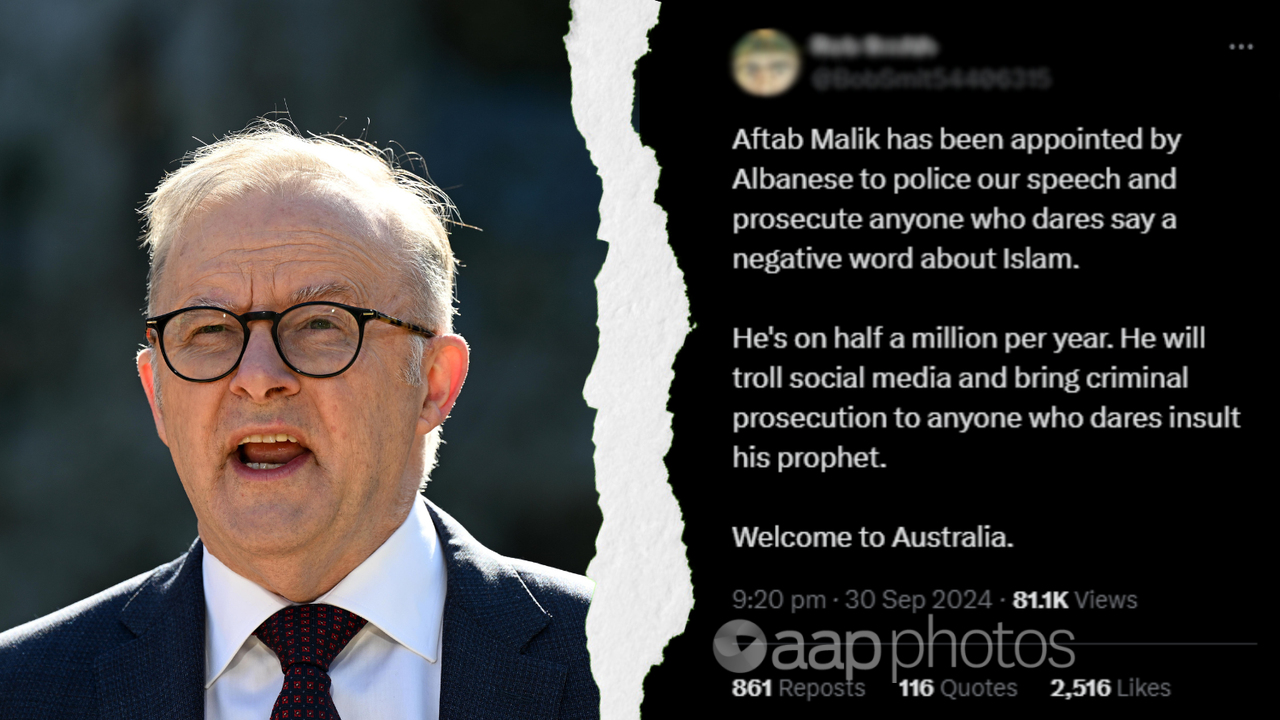
Lessons from 1940
Why did Britain prevail?
It wasn't because Churchill single-handedly won the Battle of Britain.
He didn't.
The battle was won by thousands upon thousands of people doing their jobs, accepting their responsibilities and refusing to surrender.
But leadership mattered.
Because someone had to articulate what all those people were fighting for.
Someone had to stand before a frightened population and say:
We will not surrender.
That is the lesson we seem to have forgotten.
Free societies do not survive simply because they once became free.
They survive because each generation decides that freedom is worth defending.
Without courage, we drift into silence.
Without leadership, we lose our direction.
Without ordinary people willing to stand up for what they believe, institutions eventually become empty shells ... retaining the names of the things they were created to protect while abandoning their purpose.

Our Finest Hour?
Churchill warned that defeat would bring about “a new Dark Age made more sinister, and perhaps more protracted, by the lights of perverted science.”
He was speaking about a very different enemy and a very different world.
But the underlying warning remains worth remembering.
Technology does not automatically make civilisation wiser.
Education does not automatically make people free.
Institutions do not automatically remain good simply because they were once created for good purposes.
And progress is not necessarily progress when it takes us further away from the principles that made a free society possible in the first place.
Perhaps, then, the question facing us is not whether we need another Churchill.
Perhaps the question facing us is simply this: who is willing to stand up and speak plainly?
Not a saviour. Not a dictator. Not someone to do the fighting for us.
Someone willing to fight WITH us.
A leader willing to stand in front of free people and remind them that they are still free.
A leader willing to say that borders matter.
That history matters.
That national identity matters.
That freedom of speech matters.
That ordinary people have the right to disagree with their governments without being treated as enemies of the state.
And that the civilisation handed down to us is not ours to casually dismantle because the prevailing ideology of the moment says we should.
Churchill did not promise Britain that victory would be easy.
He did not promise that everyone would survive.
He did not promise that the future would be comfortable.
He told them what their duty required.

Stand.
Perhaps that is what we are looking for now.
Not someone to save us.
Someone willing to stand with us.
Because nations rarely lose their freedom in a single afternoon.
They surrender it one compromise at a time.
And if we are to have our own finest hour, perhaps it begins with something very simple:
We refuse to surrender quietly.
BLOG COMMENTS POWERED BY DISQUS


