

Some time ago, a young boy visiting Redhead’s house asked to use the “dunny.”
His use of the word made me smile: how completely Australian.
As is often the case, it got me thinking - not about the word but about the function of the toilet itself.
The journey from Roman latrines to Victorian innovations and modern facilities is an extraordinary tale of human progress - and one worth telling.
And who says history isn't "engaging? "
So off we go....
Our story starts in the dusty cities of Mesopotamia and Egypt around 3000 BCE.
Ingenious folks crafted the first toilets - simple wooden or stone seats over pits, sometimes linked to primitive sewers. In the Indus Valley’s Harappa, homes boasted drainage systems that would make modern plumbers jealous. Egyptian elites sat on limestone thrones, while the less fortunate squatted over the Nile. Public facilities were rare, but communal bathhouses hinted at shared sanitation and civic order.
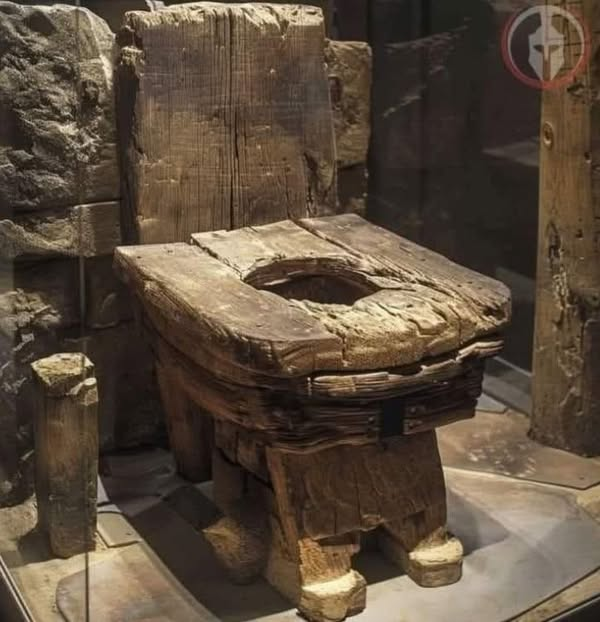
Located on the island of Crete and built by the advanced Minoan civilisation around 1700 BC, the Palace of Knossos contains remarkable technological innovations far beyond its time. One of its most impressive features was an advanced plumbing system that included something truly extraordinary: a working flush toilet with a wooden seat. This toilet was connected to a complex network of drainage pipes that carried waste away from the palace... the drainage system also managed rainwater and distributed clean water throughout the complex, demonstrating the Minoans' remarkable understanding of hydraulics and sanitation.
Fast forward to the Roman Empire, where sanitation became a spectacle. Roman latrines were communal marvels: rows of stone seats over flowing water channels, no dividers, just good ol’ camaraderie. Picture senators debating the latest “Julius Sees Ya” gossip rag while passing the tersorium (a shared sponge-on-a-stick for wiping). With aqueducts and sewers, Rome boasted up to 144 public latrines - a sanitation peak not seen again for centuries. When folks scoff at what the Romans did for us, I think of those latrines - say what you will, but they knew how to keep things flowing.
The Middle Ages: A Smelly Step Backward
Then came the Middle Ages, and sanitation took a nosedive. After Rome’s fall, ( think about it ... ) much of western Europe lost the extensive public sanitation systems that had served Roman cities.vanished in Europe.
No plumbing, no problem ....just chamber pots, open pits, or the nearest alley. Waste was flung into the streets with a shout of “Gardyloo!” (watch out for the water), turning cities into open sewers. Castles had garderobes - alcoves with chutes to moats - but for most, it was a grim, private affair. Disease thrived, and public facilities were a distant memory. It makes you wonder how anyone survived a stroll through medieval London.
Renaissance: Creative but Messy Solutions
The Renaissance brought art and science, but toilets lagged behind. Chamber pots were still king, emptied into streets or rivers, creating health hazards in rapidly growing cities. Some had privies or cesspits, but public restrooms were virtually nonexistent. Women, especially, faced challenges - venturing out meant risking safety or stigma with nowhere to “go.” In a pinch, folks used “piss corners” or walls, a far cry from Roman elegance. As cities expanded, innovation struggled to catch up with comfort.
Victorian Era: The Dawn of Modern Restrooms
The Victorian era, with its polished manners and hidden secrets, ushered in a sanitation revolution. Cholera outbreaks in the 1800s forced cities to act. London’s “Temples of Convenience” (1850s) introduced coin-operated public toilets - hence the phrase “spending a penny.” Yet they were not necessarily safe, sanitary or socially acceptable. By 1858, even the great city of London had to tackle the problem of The Great Stink. London's population had grown enormously, and its sewage was pouring into the River Thames. When the summer heat intensified the stench, the smell became so appalling that work inside the Houses of Parliament was disrupted. Politicians tried hanging curtains soaked in disinfectant, but the Thames wasn't impressed. But more on that later in a separate article.

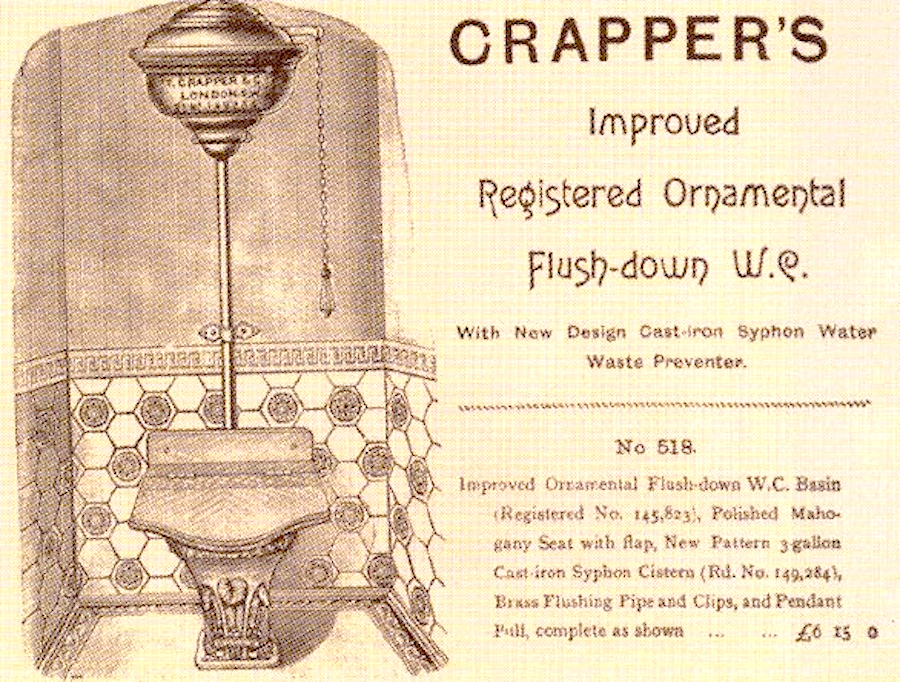
Enter Thomas Crapper, a London plumber and inventor, Crapper didn’t invent the flush toilet, but he did revolutionise it.
He patented several improvements to sanitary fittings and, perhaps most importantly, marketed indoor plumbing to a public still wary of the idea.
Victorian ladies and gentlemen, scandalised yet fascinated, reportedly queued to watch his contraptions in action. Crapper’s genius wasn’t just technical...it was promotional. He turned the toilet from taboo into technology, proving that even the most private act could be an emblem of progress.
The Urinary Leash: How Department Stores Changed Women's Lives
By the late nineteenth century, a practical barrier still tethered many women closer to home than law or custom alone required: the near-total absence of acceptable public toilets.
Some historians and commentators have described this restriction as the “urinary leash” or “loo leash” - an invisible tether that limited how long a woman could comfortably remain away from home. Men had options that women generally did not: public urinals, the occasional convenient alley, or a friendly pub. Women had to plan their outings around the availability of suitable facilities, or risk discomfort, indignity and, in some circumstances, personal danger.
Municipal public conveniences eventually appeared, as mentioned above, but provision was often inadequate. Facilities could be dirty, poorly maintained, inconveniently located or simply unsuitable for women who wanted privacy and security. A woman might have every freedom to travel into town in theory, yet find her freedom curtailed by the absence of somewhere respectable to answer nature's call.
Then came the Department Stores.
Retailers wanted women to linger, browse and spend money. They soon recognised that clean, private, separate facilities for women were not merely a courtesy but good business. A woman who could shop in comfort was a woman who could stay longer. What began as a commercial consideration helped bring about a quiet social revolution.
I remember this from my own childhood in the 1960s. I would accompany Mum to a large department store, where the ladies' restroom had little toilets for children as well as proper ones for adults. My brothers and Dad remained outside, while Mum and I entered what felt like our own little world.
It was safe, comfortable and private. At the time, I thought little of it. Looking back, I can see that these facilities represented something much bigger than convenience. They helped make a day in town practical for women and children, without the constant calculation of where to find a suitable toilet.
There is an irony here. A commercial decision, made partly to encourage women to spend their money, helped remove one of the everyday obstacles to their independence. No grand political declaration was required. Sometimes progress arrives through a porcelain bowl, a locked cubicle and a clean washbasin.
Modern Challenges: A Health Crisis Brewing?
Today, public restrooms are battlegrounds for inclusion, safety, and health. A troubling trend has emerged: girls avoiding school toilets due to dirtiness, bullying, or strict woke policies.
Looking Forward: Lessons from the Past
Public spaces have largely solved the problem with simple categories - men, women, and accessible facilities. If additional facilities are required for inclusion, that is fine, but women’s spaces must remain safe, private, and protected. Ensuring clean, accessible toilets for all is not just a matter of convenience - it is a public health and human rights imperative. Maybe the answer is to have what is already commonplace in many public spaces? Men only, women only, wheelchair accessible and a fourth facility for the other 69 genders?
The humble toilet may seem ordinary, even humorous at times, but it is also a barometer of our civilisation. It speaks volumes about how far we have progressed. Or fallen.
Shaydee
BLOG COMMENTS POWERED BY DISQUS


