

THE MACHINERY OF INFLUENCE
From Mockingbird to the Digital Age: Have We Really Learned Anything?
In an age where technology and information dominate almost every aspect of our lives, the history of Cold War covert operations such as Operation Mockingbird and MKUltra makes for uncomfortable reading.
These were very different programmes, but both raise questions that remain relevant today. One concerned the manipulation of information and public opinion. The other explored the disturbing possibilities of influencing human behaviour through psychological and physiological experimentation.
Both offer a glimpse into what can happen when governments decide that the ends justify the means.
Officially, these programmes belong to history. Their methods, however, raise questions that are anything but historical.
From state-sponsored disinformation campaigns to the psychological techniques employed by some social media platforms, the machinery of influence has evolved considerably. We now have technologies capable of collecting extraordinary quantities of personal information, analysing behaviour and tailoring messages to particular audiences.
And that brings us to a rather uncomfortable question.
Who is influencing whom, by what means, and who is keeping an eye on those doing the influencing?
Where influencers, pop stars, sporting personalities, mainstream media and even politicians use their popularity to sway public opinion, the distinction between entertainment, information, persuasion and manipulation can become decidedly blurred.
Chilling, even.
In the depths of Cold War paranoia, two American intelligence programmes provide an interesting starting point.
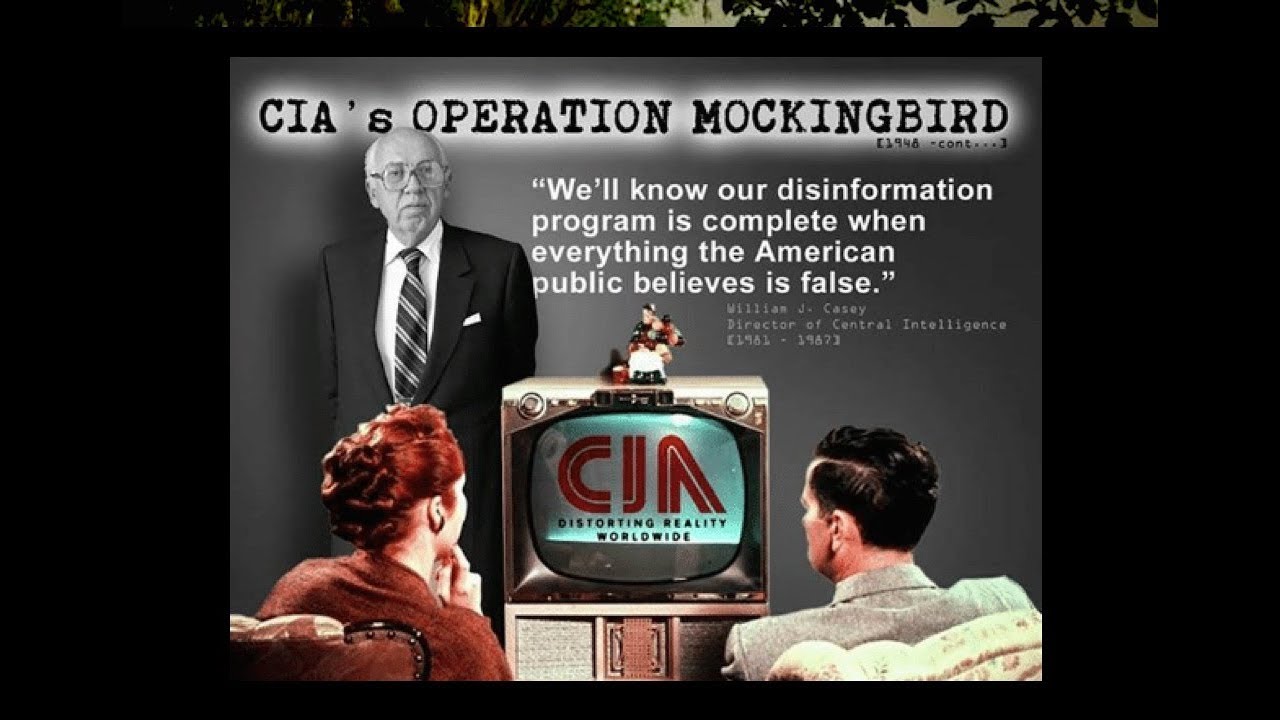
OPERATION MOCKINGBIRD: WHEN THE MEDIA BECOMES THE MESSAGE
Operation Mockingbird has become something of a catch-all name for CIA efforts to cultivate relationships with journalists and influence media coverage during the Cold War.
The historical record is a little more complicated than the popular version suggests. There were multiple CIA media relationships and influence operations, rather than one neatly defined programme responsible for everything attributed to Mockingbird.
Nevertheless, the underlying activities are documented.
During the late 1940s and subsequent decades, the CIA developed relationships with journalists, editors and media organisations. Some individuals supplied information, while others helped disseminate material favourable to American foreign policy interests.
The agency also supported anti-communist publications and organisations overseas, sometimes using financial arrangements that concealed the source of their funding.
The activities eventually attracted considerable scrutiny during the 1970s, particularly following the Watergate scandal and the investigations into intelligence agencies by the US Congress.
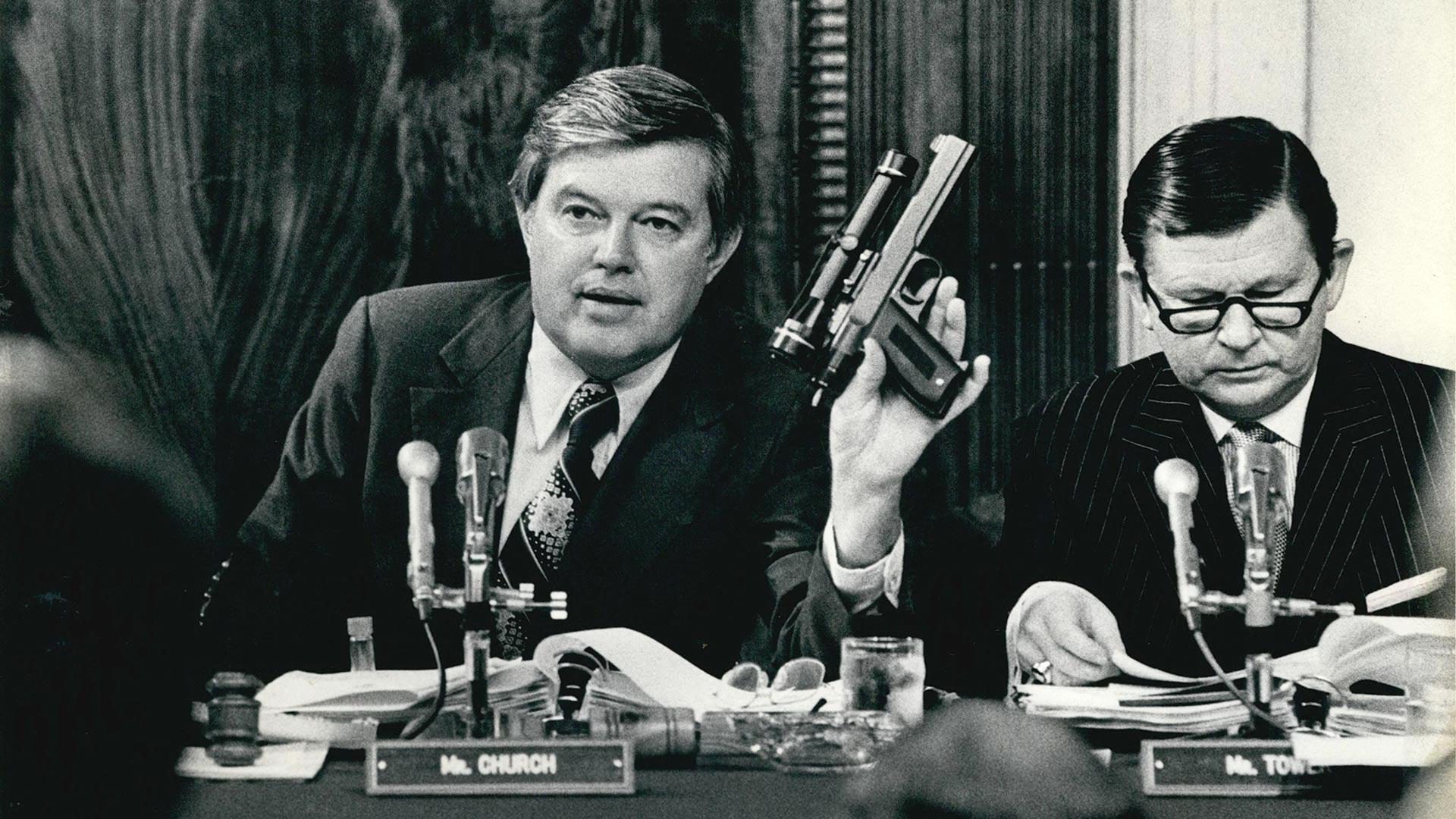
The 1975 Church Committee hearings exposed a range of intelligence abuses and raised serious questions about the relationship between government agencies and the American press.
The problem was not simply that governments wanted to communicate their version of events.
It was that audiences could be led to believe they were reading independent journalism when, in some circumstances, intelligence agencies had a hand in what was being presented.
And there lies the difficulty.
A newspaper article, a radio broadcast or a television report carries a certain authority. We tend to assume that someone has checked the facts, questioned the sources and separated reporting from propaganda.
But what happens when the distinction becomes difficult to see?
If comparable efforts to influence media narratives were undertaken today, the potential reach would be extraordinary.
A story no longer needs to travel through a newspaper office or a broadcasting studio. It can be distributed internationally within seconds, amplified through social media and repeated until it becomes familiar enough to be accepted as fact.
What a notion.
MKULTRA: EXPERIMENTING WITH THE HUMAN MIND
If Mockingbird raises questions about controlling information, MKUltra takes us into considerably darker territory.
Conducted by the CIA from the early 1950s into the 1970s, MKUltra explored methods of influencing human behaviour, interrogation and psychological control.
The programme involved research into drugs, hypnosis, sensory deprivation and other forms of psychological experimentation. Some experiments were conducted without the knowledge or consent of those involved.
LSD was among the substances used, and the programme extended into universities, hospitals, prisons and other institutions, sometimes through intermediaries who did not know the ultimate source of the funding.
The programme's objectives were ambitious. Intelligence officials wanted to understand whether human behaviour could be manipulated, whether resistance to interrogation could be overcome and whether psychological techniques could be used to influence individuals.
The results did not produce the reliable mind-control techniques that popular culture sometimes attributes to MKUltra.
But the ethical consequences were very real.

In 1977, a US Senate hearing examined the programme after records relating to MKUltra were discovered. Much of the original documentation had already been destroyed, making it difficult to establish the full extent of the experiments.
The surviving evidence was disturbing enough.
The Canadian connection
One of the more troubling aspects involved experiments conducted at Montreal's Allan Memorial Institute under psychiatrist Ewen Cameron.
With CIA funding channelled through intermediary organisations, Cameron pursued methods intended to break down and reshape patients' psychological functioning.
Experiments included prolonged drug-induced sleep, repeated electroshock treatments and sensory deprivation.
Patients, some of whom had sought treatment for ordinary psychological difficulties, were subjected to procedures without properly informed consent.
The consequences for some were devastating.
These were not the fantasies of a spy novelist. They were documented events involving real people, real institutions and government money.
And they raise an uncomfortable question about what happens when scientific curiosity, intelligence objectives and institutional authority are allowed to operate without adequate ethical safeguards.
IT WASN'T JUST AMERICA
The Cold War was not exactly an era of international good manners.
The Soviet Union conducted extensive propaganda and disinformation campaigns, known as dezinformatsiya, designed to influence foreign governments and populations.

Domestically, Soviet authorities tightly controlled the media, restricted dissent and used propaganda to reinforce the political ideology of the state.
China developed extensive systems of ideological indoctrination, political re-education and psychological coercion. These included the notorious re-education through labour system.
During the Second World War, Nazi Germany had also conducted brutal and inhumane experiments on prisoners, while North Korea became notorious for the psychological coercion and indoctrination of prisoners during and after the Korean War.
And then there was Canada, where CIA-funded experiments took place on Canadian patients who had little idea of the real purpose of the research.
Different countries, different methods, but a recurring theme.
The desire to influence, control or reshape human behaviour is hardly new.
The question is whether the tools available today have made that desire easier to pursue.
THE DIGITAL AGE: A NEW KIND OF INFLUENCE
This is where the subject becomes particularly interesting.
During the Cold War, influencing public opinion required considerable organisation. Intelligence agencies needed contacts, journalists, publications, radio stations and networks through which information could be distributed.
Today, the machinery is rather different.
Governments and private corporations collect vast quantities of personal information. Digital platforms analyse browsing habits, viewing preferences, purchasing decisions, interests and patterns of behaviour.

Algorithms determine what content is presented, what receives prominence and what is less likely to be seen.
Advertising can be tailored to particular audiences. Political messages can be targeted at specific groups. Information can be amplified, repeated or buried.
None of these activities automatically constitutes covert manipulation. Advertising, personalisation and political communication are not inherently sinister.
But the capacity to influence behaviour through the careful selection and presentation of information is now considerably more sophisticated than anything available to Cold War intelligence officers.
Consider the possibilities.
A person who repeatedly encounters a particular message may begin to regard it as widely accepted opinion.
A controversial story can be amplified until it dominates public discussion.
An alternative viewpoint can receive so little exposure that people begin to assume it barely exists.
And when millions of people receive different versions of the same story, how do we establish what the public is actually being told?
We don't need to imagine a secret laboratory to recognise the possibilities.
The technology already exists. The ethical questions concern how it is used, who controls it and whether the public has any meaningful understanding of what is happening.
AND WHAT ABOUT AUSTRALIA?
We should perhaps bring this a little closer to home.
Australia has embraced digital technology across government services, financial transactions, communications and everyday administration.
Digital ID is one example.

There are legitimate arguments in favour of digital identification. It can make accessing services more convenient, reduce identity fraud and provide alternatives to repeatedly producing physical documents.
The Australian Digital ID legislation also includes privacy protections and provides for voluntary participation.
But legislation and safeguards deserve scrutiny. They should not simply be accepted because a government tells us they are necessary or convenient.
The wider question is what happens as identity, personal information, financial activity and other forms of behavioural data become increasingly interconnected.
What information is collected?
Who can access it?
How long is it retained?
What happens if the system is expanded beyond its original purpose?
And what protections exist if a future government decides that the boundaries should be different?
These are not accusations. They are reasonable questions in a democracy.
You may think otherwise, but I could not possibly comment.
The broader issue is the capacity of governments to combine information, monitor behaviour and use administrative systems to influence what people can do.
We should be interested in that possibility long before it becomes a problem.
HAVE WE REALLY LEARNED ANYTHING?
The history of Mockingbird and MKUltra does not prove that equivalent programmes are operating today.
Nor does the existence of sophisticated technology mean that every government initiative, media organisation or social media platform is engaged in some grand conspiracy.
But that is not the point.
The point is that the capacity to influence people has grown enormously, while the need for accountability, transparency and ethical restraint remains just as important as it was during the Cold War.
There is a difference between informing people and manipulating them.
There is a difference between persuasion and coercion.
And there is a difference between allowing people to make their own decisions and quietly arranging the information, incentives and pressures that shape those decisions.

We should be particularly mindful of the role played by those who command enormous audiences.
Influencers, entertainers, sporting personalities, journalists and politicians can all help shape public opinion. Their popularity may give their words considerable weight, but popularity is not the same thing as expertise, accuracy or impartiality.
The responsibility lies with all of us to question what we hear, examine the evidence and resist the temptation to accept something simply because everyone else appears to believe it.
The real danger is not necessarily that someone will take control of our minds.
It is that we might gradually surrender the habit of thinking for ourselves.
The spectre of Mockingbird and MKUltra should remind us that power, technology and good intentions are not sufficient safeguards against abuse.
We need ethical governance, independent scrutiny, a genuinely free press and citizens prepared to ask awkward questions.
Because freedom isn't simply the right to speak.
It is also the ability to think independently, question what we're told and make decisions without someone quietly arranging the choices in front of us.
And if we become apathetic, accept poor government, tolerate a blinkered or biased press and allow fear to become a permanent feature of public life, we should not be surprised if the boundaries of our freedoms begin to change.
We might just find ourselves living in a rather dystopian world, where those who haven't been harvested by the machinery of influence discover that questioning the machinery itself is becoming increasingly uncomfortable.
But surely, with our governments, our media and all our wonderful technological advancements, we have absolutely nothing to worry about.
No, that couldn't possibly happen.
BLOG COMMENTS POWERED BY DISQUS


