

Who pays the Ferryman?
In the old myths, no soul crossed the river Styx without an offering. Today, we often leap without looking, ignoring the toll collector at the edge of the water.
But the crossing always has its cost, whether we pay it or someone else does. Some of our current governments have a habit of not even knowing the price of anything and the value of nothing. We are ruled by algorithms and announcements. But we are human - and humans live in the cost.
Wars are dissected by body counts and budgets. Policies are passed with a calculator, and lives are led under a spreadsheet. We know the price of everything. But who still speaks of cost?
Price is clean. Price fits in a column. Price is what politicians debate and treasurers announce.
But cost ? Cost is borne. Cost is lived. Cost is the long, quiet aftermath. And that of course beggars the question: where is the value?

It all started with Bushie.
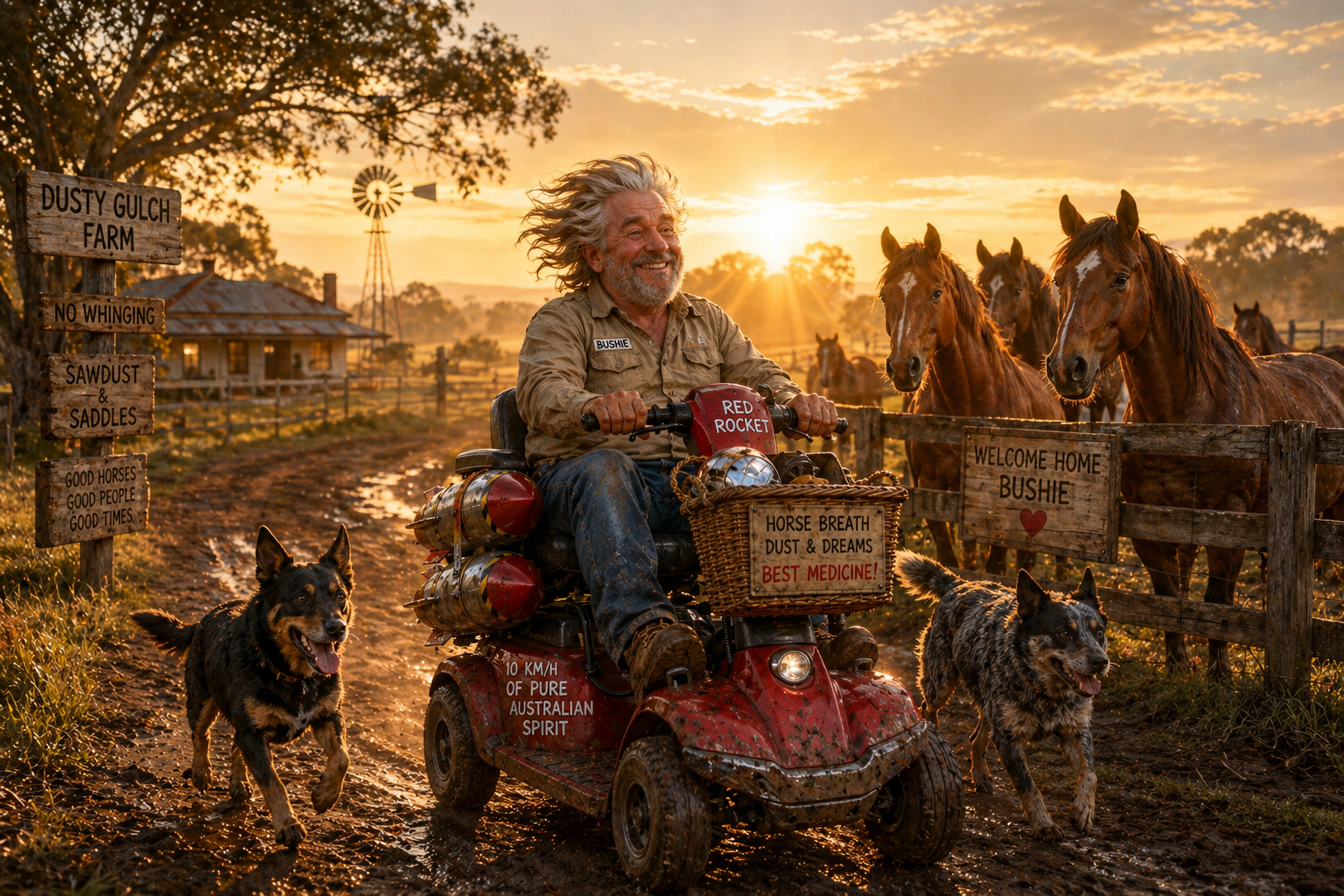
Bushie bought a red mobility scooter for $3000. On paper, that’s the price. But it made me think about something larger… a price on a receipt, a simple transaction. But the longer I sat with it, the more I realised that figure didn’t really explain anything important.
It told me what left the bank account, but nothing about what was about to change in everyday life, independence, or the simple ability to move around freely again.
Ours is an age obsessed with measurement. We chart our economies by GDP, our health by calorie counts, our futures by carbon emissions.
A society that reduces us to numbers robs us of the space to feel, to think freely, and to live.
We are told the planet demands action, and the price of carbon must be paid. So industry is shuttered, regions are "transitioned," and cities grow richer while rural towns fall silent.
The price: green tech subsidies, carbon credits, global applause.
The cost? The collapse of manufacturing towns. Generational trades lost. The dislocation of skilled workers, who once built things and now apply for welfare. A culture that once made steel and cars now makes TikTok videos.
Immigration is often sold by its price point: more hands, lower costs, economic growth.
But what of the cost? When communities change faster than they can adjust, when values fracture, when cohesion crumbles, when the civic language no longer holds?
The price might be attractive. But the cost is cultural disorientation, strained schools, diluted trust, and the quiet anger of people who feel unheard in their own neighbourhoods.
War is waged with strategies, targets, and troop numbers. But it is paid for in broken families, PTSD, and the thousand-yard stare of a young man who has seen too much.
Welfare is budgeted in tax policy and economic forecasts. But its cost is lived daily by those who are living in tents, filling out forms, living under suspicion.
To come back to the beginning:
Price is for Parliament. Cost is for people.

If we do not learn to reckon cost alongside price, we will continue to make cruel bargains with ourselves. We will count savings while losing souls. We will win balance sheets and lose the nation.
The moral accounting must begin.
Because the greatest debts are not always those owed in coin, but those owed in conscience.
Who Pays the Ferryman? And should we pay him until he gets us to the other side?
We live in a world shaped by convenience and individual pursuit, driven by what we want, what we can afford, and what brings us pleasure. But seldom do we stop to ask:
What is the true cost of my choice? Who bears it, and when will it come due?
Every day, small decisions are made in households based on the price someone is willing to pay. The holiday we book to escape our stress. The phone we upgrade - though the old one still works. The vote we cast for promises of ease. The silence we offer in exchange for not rocking the boat.
But every indulgence has a shadow. The cheap clothes may come at the cost of child labour. The affordable imported " food " at the cost of broken farms.
It’s easy to lose ourselves in a world where 'price' is transactional and visible - scanned, swiped, and settled. But 'cost'... cost is hidden. It’s paid by others, later, quietly. It’s paid in trust eroded, culture frayed, the environment wounded, families grieving.
Price is what we pay. Cost is what is borne. But value - value is what endures. It is the legacy of a decision, the soul of a sacrifice, the reason something matters. When we chase price and ignore cost, we often lose value. But when we consider all three... price, cost, and value... we begin to live more wisely, choose more justly, and act with greater care for what truly matters.
We must stop being mere passengers in this managed decline. We must look at our lives, our neighbourhoods, and our traditions, and start asking: ‘If I act now, does this lead to a bank balance, or a legacy?’

The Ferryman is waiting. It is time we start paying for the right things. And Bushie did. He is getting great value.
Monty
BLOG COMMENTS POWERED BY DISQUS


