

On the 10th of January 2011, a catastrophic deluge unleashed an unprecedented "inland tsunami" across Toowoomba and the Lockyer Valley, leaving a trail of devastation in its wake. Torrential rains transformed creeks into raging torrents, sweeping away cars, homes, and lives in a matter of minutes. Entire communities were submerged, as families clung to rooftops, desperate for rescue. With over 20 lives lost and countless others left homeless, the disaster became one of Queensland's darkest chapters, a stark reminder of nature’s unyielding power and a day I will live long in my memory.
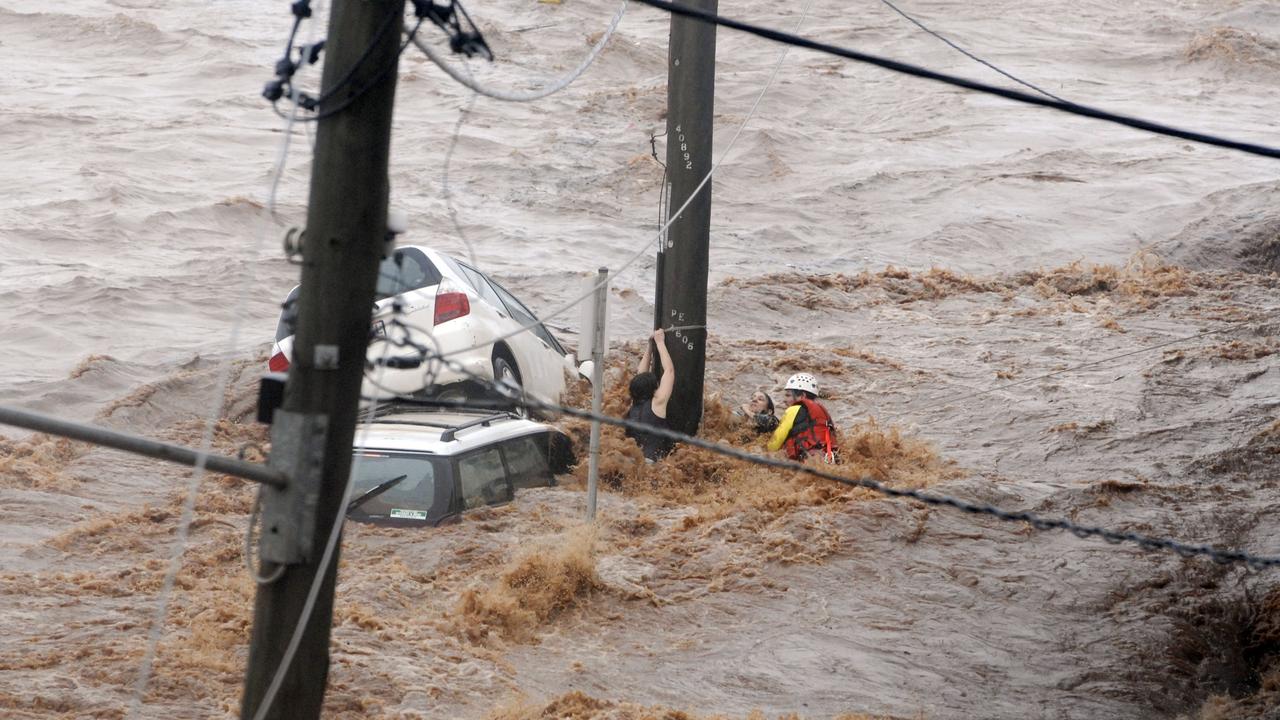
" A 3-metre wall of water came without warning, tearing through Toowoomba - Queensland’s largest inland city - when rain of “biblical proportions” fell on already soaked earth after months of record-breaking falls across the state "The inland tsunami swept through Toowoomba, washing away cars, damaging buildings, picking up water tanks, and thrusting people into the torrent. "
I will never forget the day. It had been raining in Toowoomba. It had been raining across much of Queensland and everywhere was soggy. The rain had been falling steadily all over the state and I had no idea just how bad things were about to get.
I was at an appointment with a client. Just after lunch.
It was coming down more heavily than previously. It got heavier and heavier.
I called an abrupt end to the meeting and decided to head home "just to be on the safe side. "
By the time I pulled up outside my home, my driveway was a torrent of water and I knew that there was no way in hell that I was going to take the car down to the garage safely. I waded down what used to be my lawn and arrived at the front door about the same time as the water started lapping up to my steps.
Meanwhile, across the other side of town, my daughter was heading into the city centre to pick up her two oldest children, then aged 12 and 14. They were with their Dad at his place of work. As she drove down to her destination, she saw a rising torrent of muddy water. It was quickly rising up the hill and she, wisely, turned around and headed in the opposite direction. As she did so, a woman, just 100 or so metres down the road from her, got caught in the water and was last seen screaming as her car floated like a toy at the mercy of nature.
My daughter says she will never forget the image of that woman.
In my son in law's place of work, the kids were following their father's orders to get upstairs. Up there, things were no better. My granddaughter found a hammer and bashed a hole in the ceiling and pulled her sibling to safety.
Back at my place, reports were coming through that an inland tsunami had hit Toowoomba, a city perched 700 metres above sea level ( about 2100 feet ). Over 160 mm of rain fell in that hour. That is about 6 inches in old measurements. On an already soaked land.
Just north of Toowoomba is Cooby Dam. It was filled to overflowing. The water headed to Toowoomba.
Down the bottom of the plateau where Toowoomba sits, lies the agricultural area of the Lockyer Valley. All of the water that fell from the sky needed somewhere to go. It went down into the Lockyer Valley.
The small town of Grantham was next to feel the pain. Nestled below Toowoomba, locals were soon to face horror. According to local media, the flood waters had reached a height of 7 or 8 metres (23 or 26 ft) by the time it struck Grantham. The peak discharge rate around Withcott and Grantham where Lockyer Creek is joined by Gatton Creek, was estimated to be 3,500 m3 second.
In South East Queensland, the Wivenhoe Dam filled to a level equivalent to 191% of its supply capacity on 11 January 2011.
Grantham suffered the greatest number of deaths, losing 12 people during the disaster.
Thirteen others were killed in Brisbane, Toowoomba, Spring Bluff, Murphy's Creek, Postman's Ridge, Minden, Helidon, Karrabin and Brymaroo.
Over the coming days and weeks, food and petrol were running out. Toowoomba was isolated due to road closures.
But of all of the things I will never forget was the stench. The foul smell of rotten carpet, furniture and household debris as people moved their ruined lives to the curbside to be dumped. It was a smell of loss, heartache and misery. The entire city reeked of it.

N.S.W. Rural Fire Service helicopter flying over a collapsing house during the floods in Grantham, Queensland, 2011. Photographer: Amanda Gearing. 28510 Amanda Gearing Queensland Flood Collection. State Library of Queensland. Image 28510-0145-0084
Brisbane was next to feel the brunt of the floods as the water from the water from Wivenhoe Dam hit the Brisbane River. Homes were inundated and the devastation was enormous.


